There is a gap between what educational platforms measure and what actually shapes a student’s outcome. Platforms are built to measure clicks, completion rates, and time-on-task. But the real work of education — building trust, noticing invisible struggles, modeling care — is relational. It is almost entirely invisible to the software.
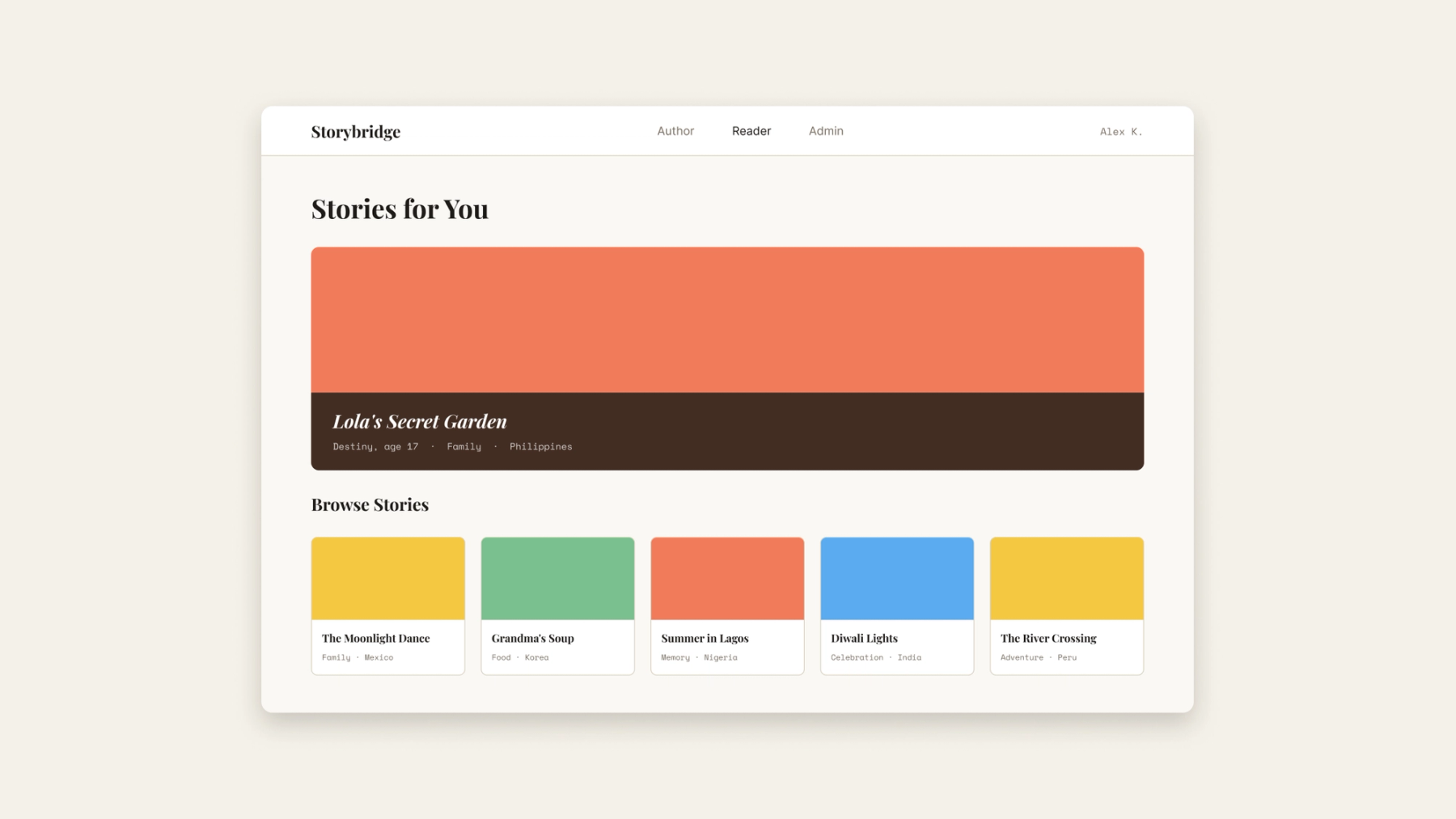
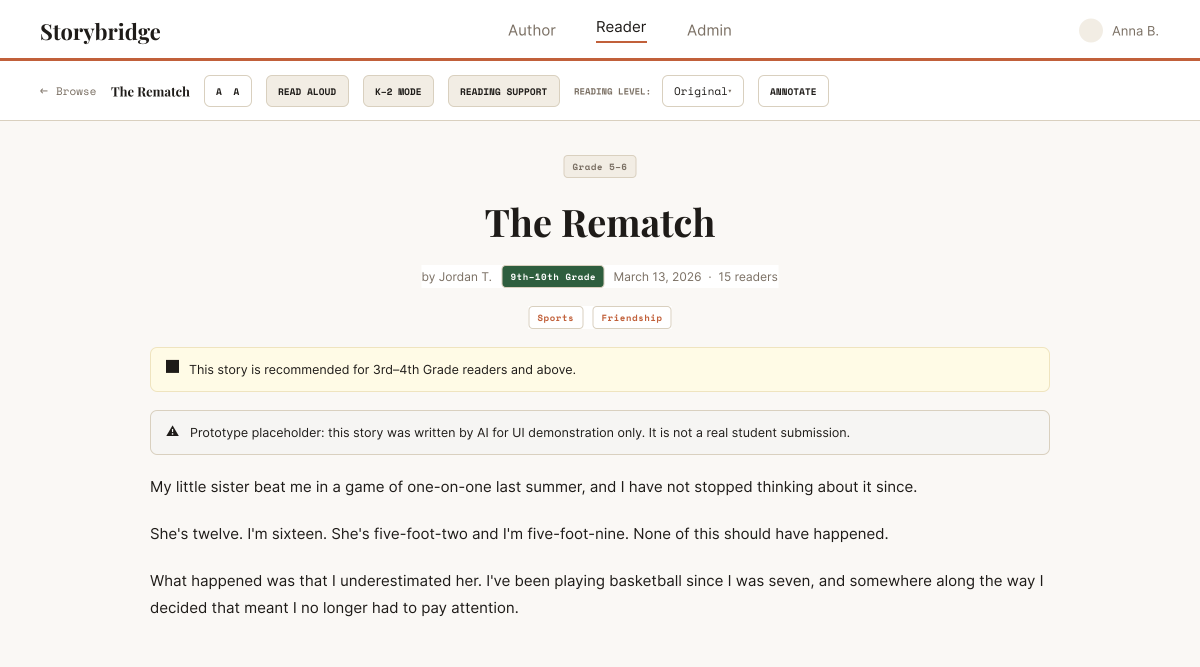
When my team and I began StoryBridge, we were looking at two groups of students whose needs are usually treated as separate product categories. Younger readers need stories that feel relevant and accessible. High school students need a real audience and a reason to write beyond a classroom grade.
When you look closely at public school districting, you realize that what brings these two groups together is community. High schoolers know what it is like to be an elementary schooler much more recently than their parents do. They are natural mentors. A younger student wants to read about a varsity soccer player from their own town, or a story that references the iconic ice cream shop down the street.
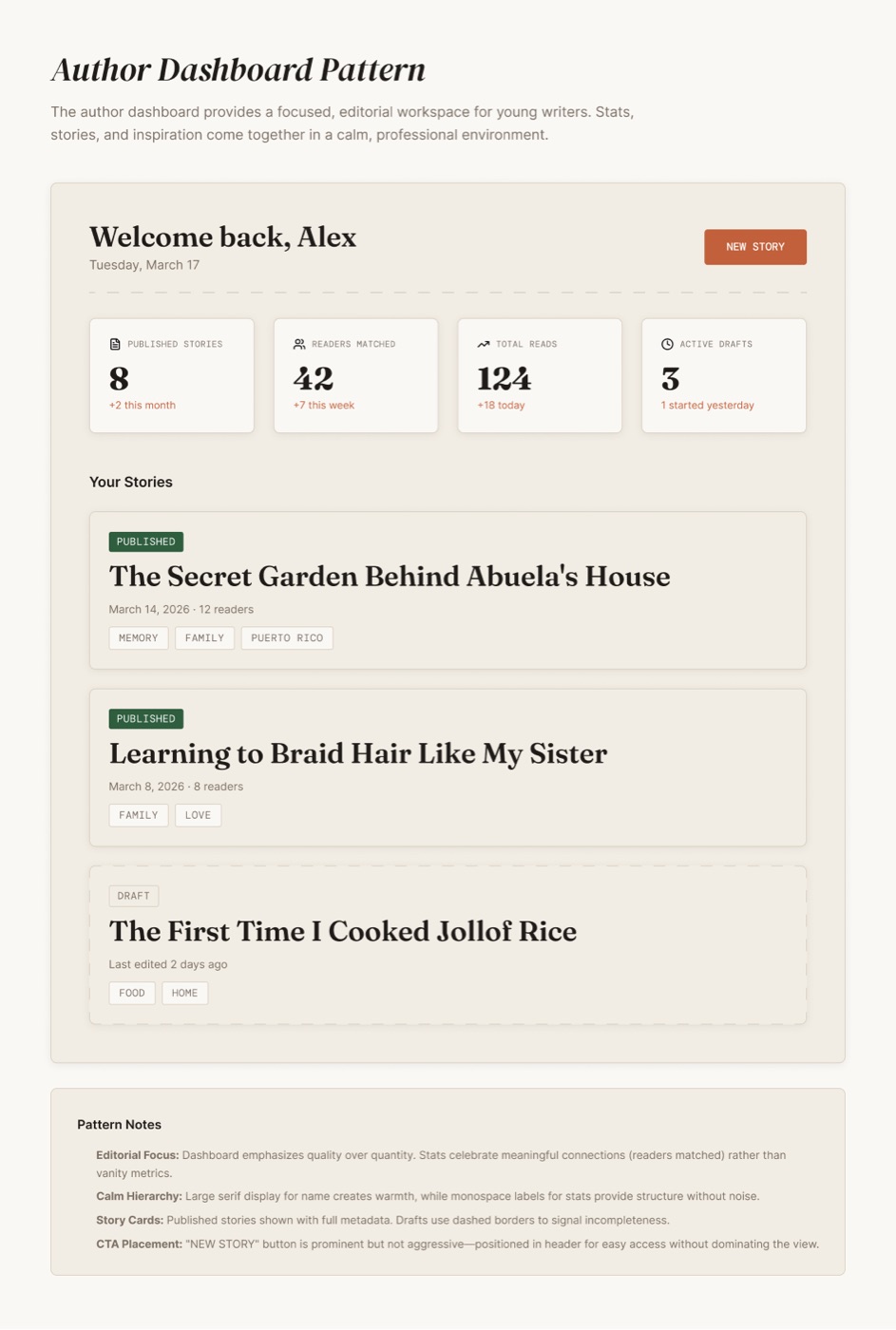
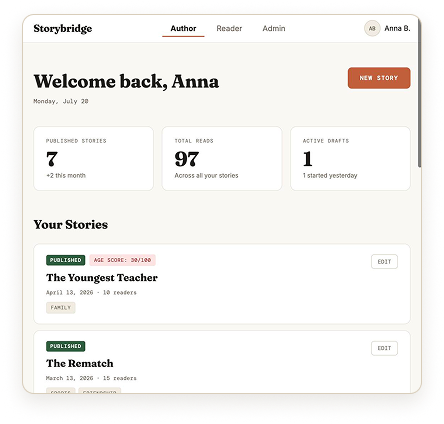
The design opportunity was not to build another content-delivery app. The opportunity was to design a governed relationship — a platform where any high schooler could write a story that could be shared with an elementary schooler, a mentorship exchange that just required some creative writing to make a difference.